-
 Fredericia Stolefabrik, Denmark. Solid oak frame with replaced cushion in kvadrat fabric. 220 x 73 x 66 cm.
-
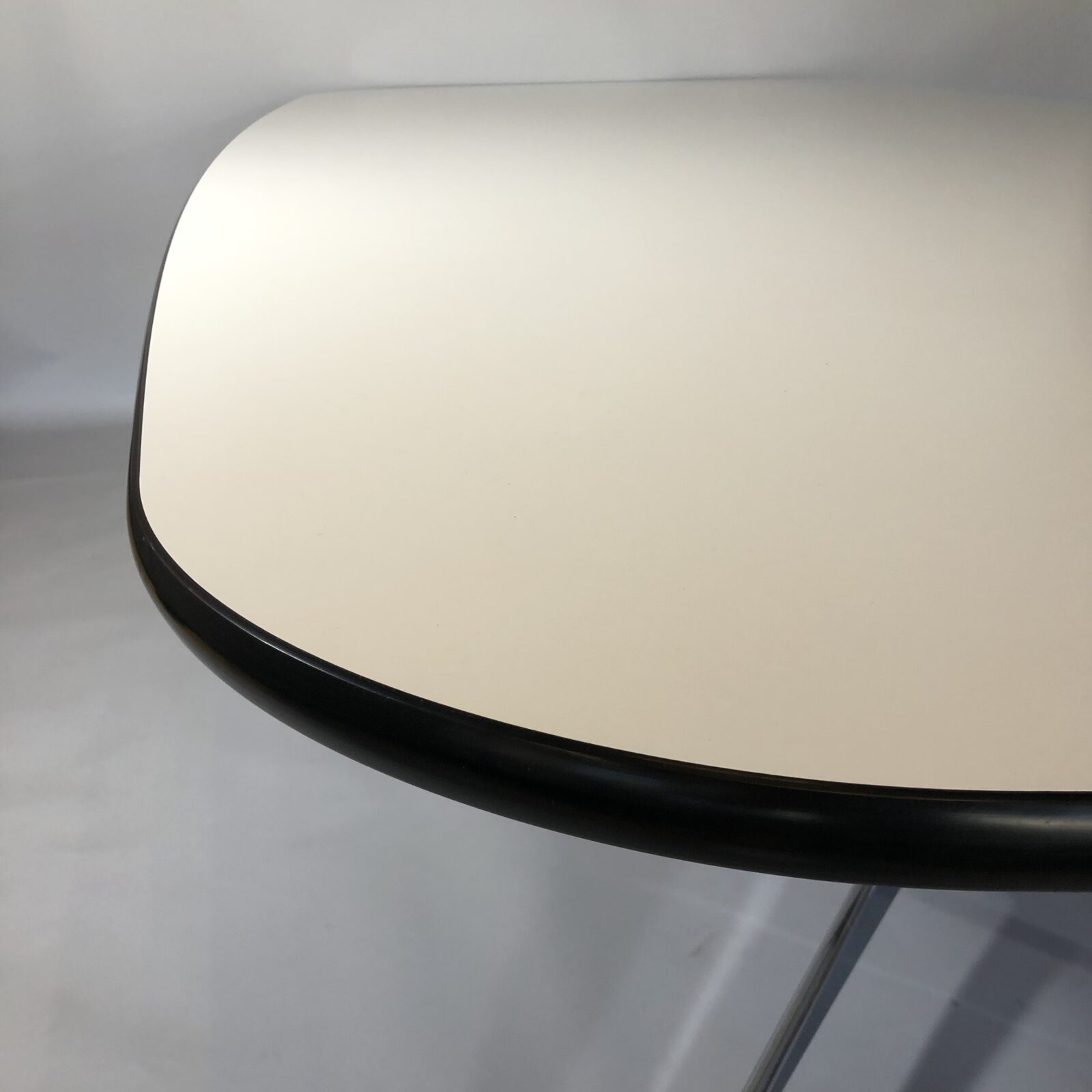 Vitra, Germany for Herman Miller, USA Designed in 1964, produced in 2006. White laminate top with black edging, on aluminium & steel base. Paper label. 272,5 x 137,5 x 72 cm.
-
 Tall sideboard with six sliding doors and six drawers in book-matched teak veneer with solid wood edge-banding. Interior with adjustable shelves and an integrated bar section with pull-out storage trays. 184,5 x 46 x 127 cm.
-
 Design by Jorgen Moller, Denmark. Canaletto walnut veneer on HPL laminate top, with matt extruded aluminium legs. 58 x 58 x 45 cm.
-
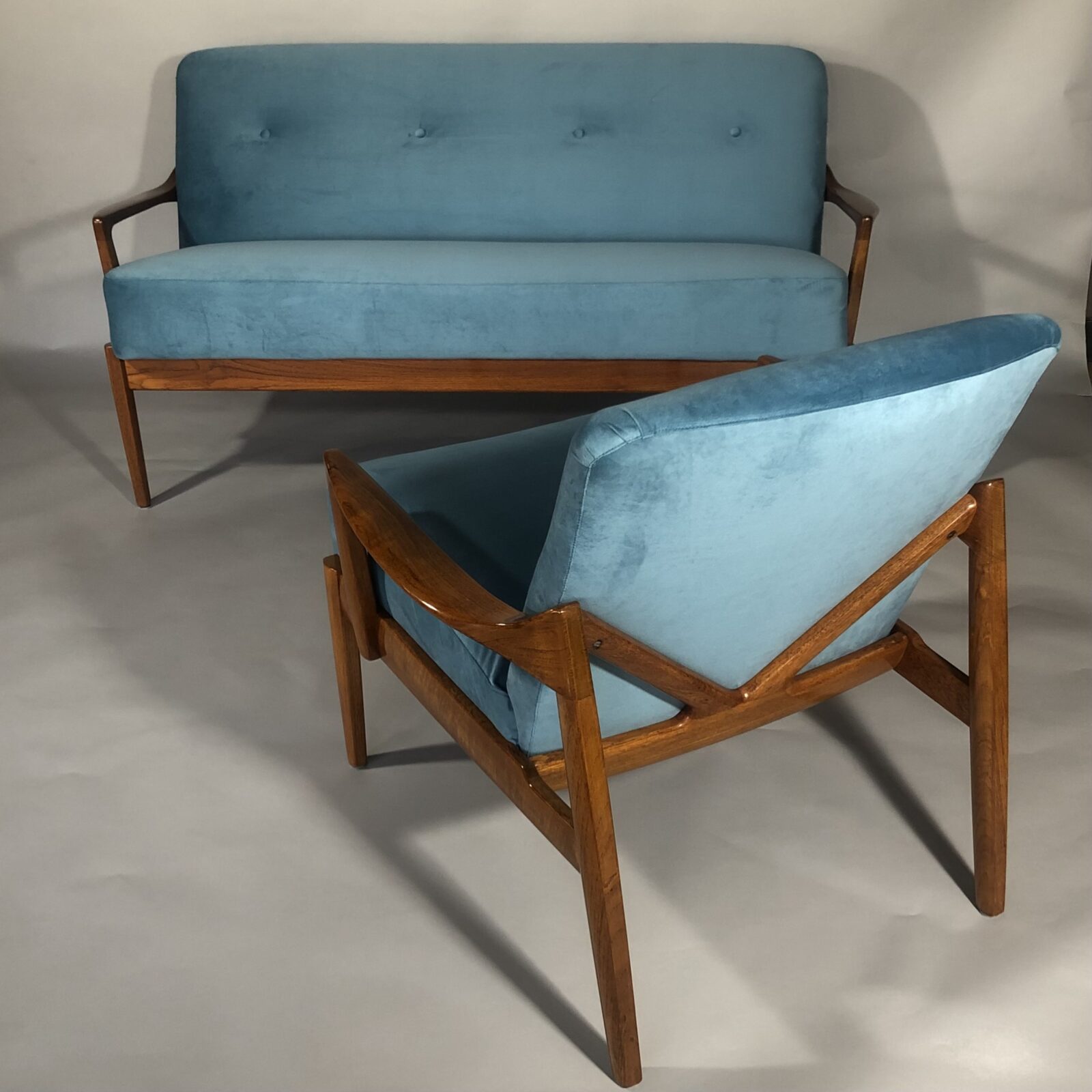 France & Son cabinetmakers Denmark. Solid teak with reupholstered cushions. Early company coin logo. 158 x 77 x 80 cm (sofa) (Price for sofa & chair) Reference : Design Museum Danmark, furniture index, illustrated.
-
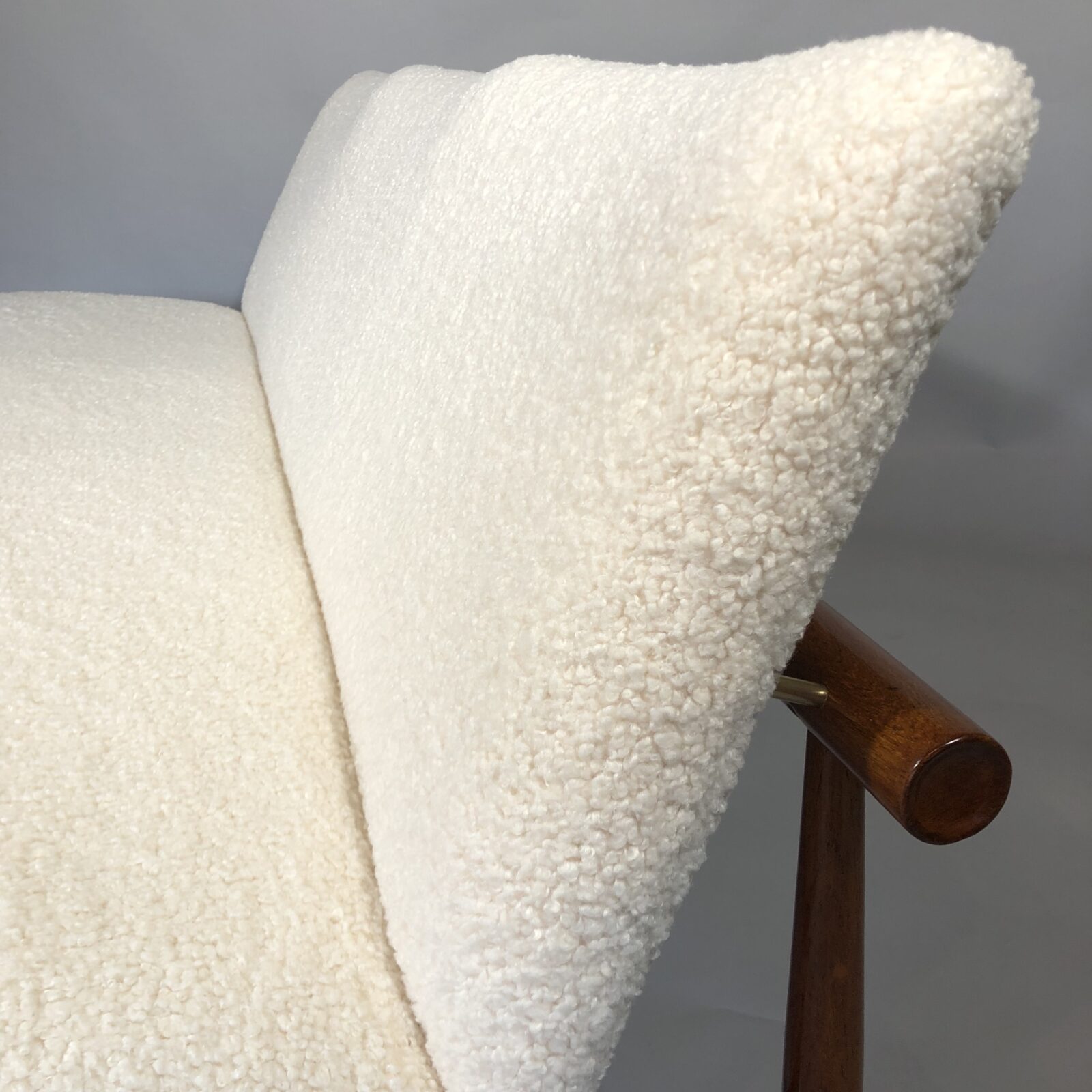 France & Son, Denmark. Burmese teak & brass with company coin logo. 187 x 77 x 74,5 cm. Note : Design was inspired by the Miajima water gate off the coast of Hiroshima. Reference : Design Museum Danmark, furniture index RP00614
-
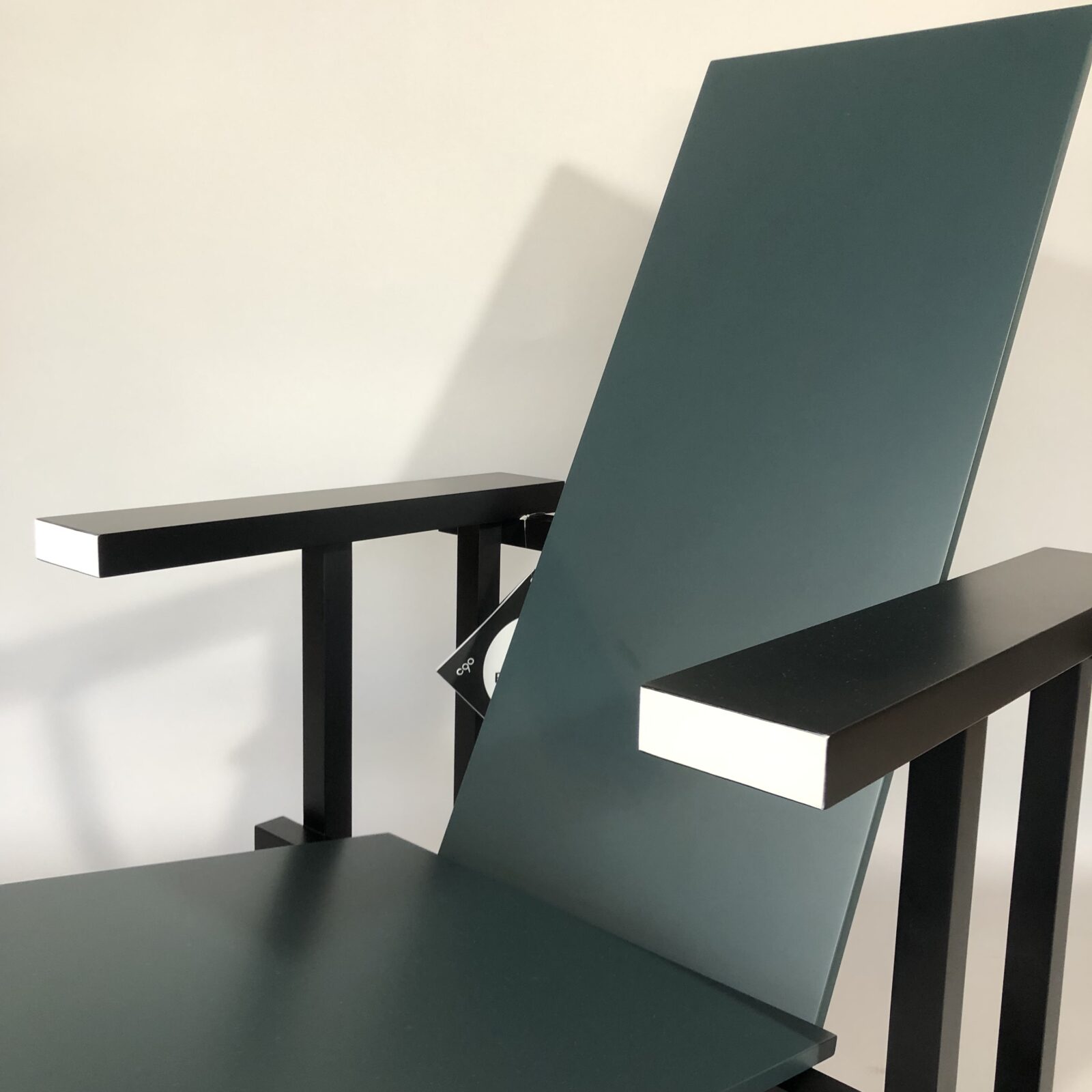 Released by Cassina in a numbered edition in 2015. Edition no.8033 Lounge chair with frame in black-stained beechwood with painted white crossbar edges, plywood seat/backrest with polyester lacquer in dark green colour. Company & designer marks on stretcher. 65,5 x 83 x 88 cm. (including Cassina leather cushions) Whilst Cassina was researching the origins of the Red and Blue model by Rietveld, it emerged that the key idea of the first prototypes was based on the concept of spatial organisation expressed through the monochrome tones of the parts. The first version (the one upon which a young Rietveld is sitting on outside his furniture workshop in Utrecht) was in fact produced with unpainted wood. In the following years Rietveld proposed various examples, either monochrome or painted with different colours, according to the requirements of his customers and the interiors for which the chairs were intended. As such it comes as no surprise to find an example from the 1920s created for the Dutch school teacher, Wicher Zeilmaker, featuring a black frame and white ends but where the seat and backrest were painted dark green. Rietveld believed that there was a greater goal for the furniture designer than just physical comfort – the well-being and comfort of the spirit. Rietveld & his de Stijl colleagues, including the movement’s most famous theorist and practioner, Piet Mondrian, sought to create a utopia based upon a harmonic man-made order, which they believed could renew Europe after the devastating turmoil of World War I.
-
 Designed for Saporiti Italia. Birds-eye maple with brass handles on square feet. 103,5 x 68,5 x 87,5 cm.
-
 Designed for Artifort, Netherlands. Ebonised oak slats on chromed steel base. (rechromed & french polished) 126 x 84 x 67 cm. These benches were commissioned by the Dutch department store Bijenkorf in 1968. They were only sold in the Netherlands and in small volumes.
-
 Design by Marie-Aurore Stiker-Métral in laser-cut steel with gloss black lacquer finish. 38 x 48 x 103 cm. (price for set of 4) Marie-Aurore Stiker-Métral was born in Paris on 15th March 1981 and graduated from ENSCI-Les Ateliers in December 2007: she underwent this design-oriented training after studying philosophy for four years, including one year at d'Urbino university in Italy. During her time at ENSCI, she obtained a bursary from VIA to develop her 'La Pliée' chair, which is now being produced by ligne roset. In conjunction with Felipe Ribon she was the winner of the competition 'L'eau à la bouche', organised by Veolia Eau. Her final dissertation, mentored by Philippe Louguet, dealt with the 'paradoxes of discretion'; her graduation project, mentored by Erwan Bouroullec, explored a range of 'domestic techniques' (sewing, embroidery, lace, macramé, weaving), using them to create furniture (storage, a fireside chair, a lamp) with digitally-cut wooden frames and textile surfaces.
-
 MDF construction with stained wenge veneer. Produced under licence by Knoll USA, c. 2003. 70 x 70 x 45 cm.
-
 Kartell, Italy. Clear polycarbonate injection-molded. Molded signature on back of seat. 54 x 55 x 94 cm. (Price for each, 8 available) Philippe Starck used the geometric essence of 18th century French neo-classicism, of an oval medallion-shaped backrest, curved armrests & straight legs; to make a chair that bridges the gap between historical glamour and ultra-modern industrial efficiency.
-
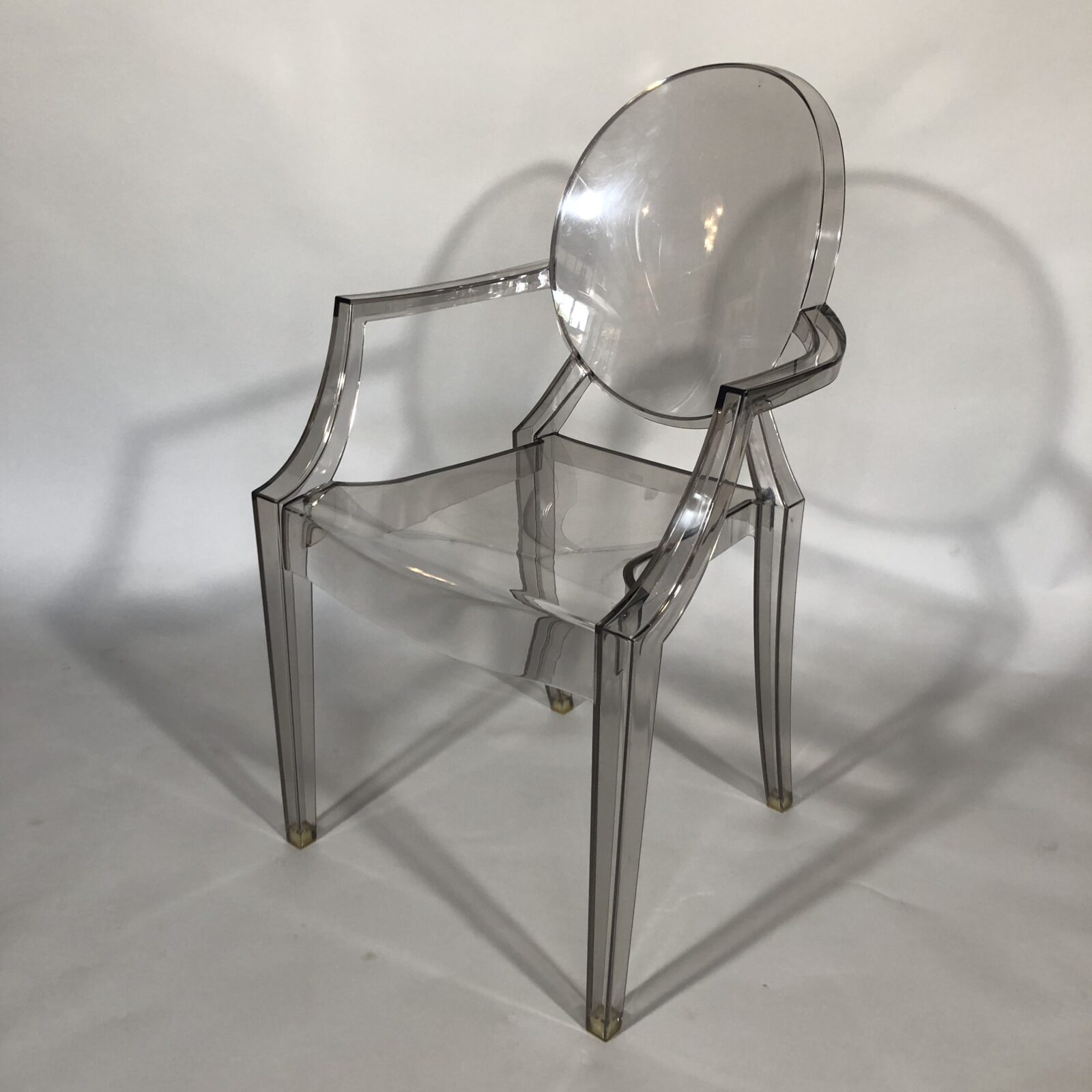 Kartell, Italy. Smokey polycarbonate injection-molded. Molded signature on back of seat. 54 x 55 x 94 cm. (Price for each, 11 available) Philippe Starck used the geometric essence of 18th century French neo-classicism, of an oval medallion-shaped backrest, curved armrests & straight legs; to make a chair that bridges the gap between historical glamour and ultra-modern industrial efficiency.
-
 Ligne Roset, France. Ebony stained beech wood frame with adjustable feet and 12mm toughened glass. 80 x 80 x 26,5 cm. (sold together or individually at R16 500 each) Note : Antigone tables were a re-release of an early 1980s design.
-
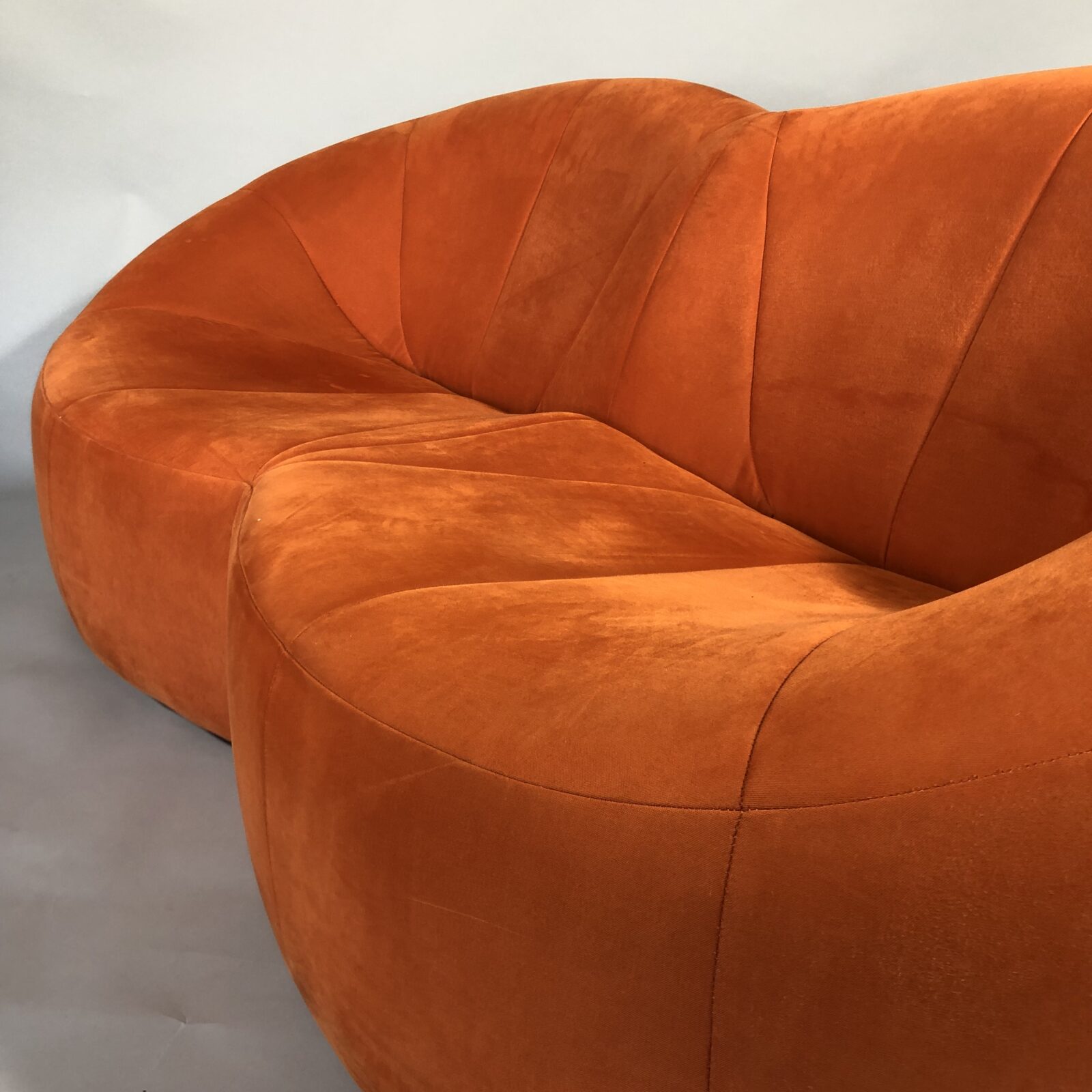 Ligne Roset, France. Moulded polyurethane foam seat & back, on ABS plastic base. Label. 172 x 83 x 69 cm. (slight water stain). Note: The Pumpkin Loveseat was designed in 1971 for the French president Georges Pompidou at the Elysee Palace. In 2008 Ligne Roset produced it commercially.
-
 Ligne Roset, France. Moulded polyurethane foam seat & back, on ABS plastic base. Label. 100 x 85 x 68 cm. Note: The Pumpkin Loveseat was designed in 1971 for the French president Georges Pompidou at the Elysee Palace. In 2008 Ligne Roset produced it commercially.
-
 E. Kold Christensen, Denmark. Designed in 1956 with a matt, chrome-plated spring steel frame with original canvas underlayer and new replaced leather cover. Impressed logo on stretcher. 63 x 67 x 71 cm Provenance : ordered directly from Denmark by the architect Zouves, and ultimately arrived in Kimberley in 1962.
-
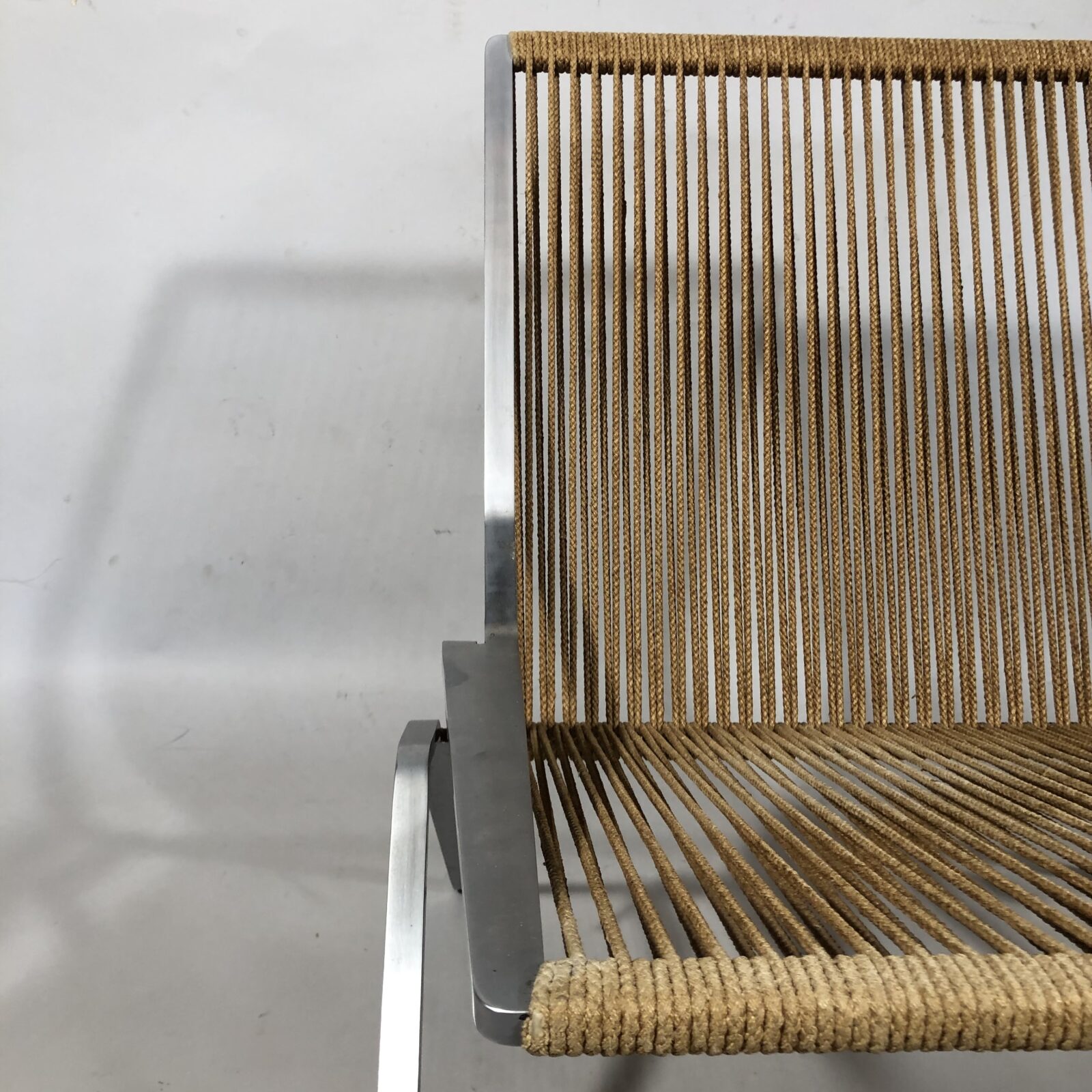 E. Kold Christensen, Denmark. Designed in 1951 with a matt, chrome-plated spring steel frame, with natural halyard line seat & back. 69 x 73 x 75 cm
-
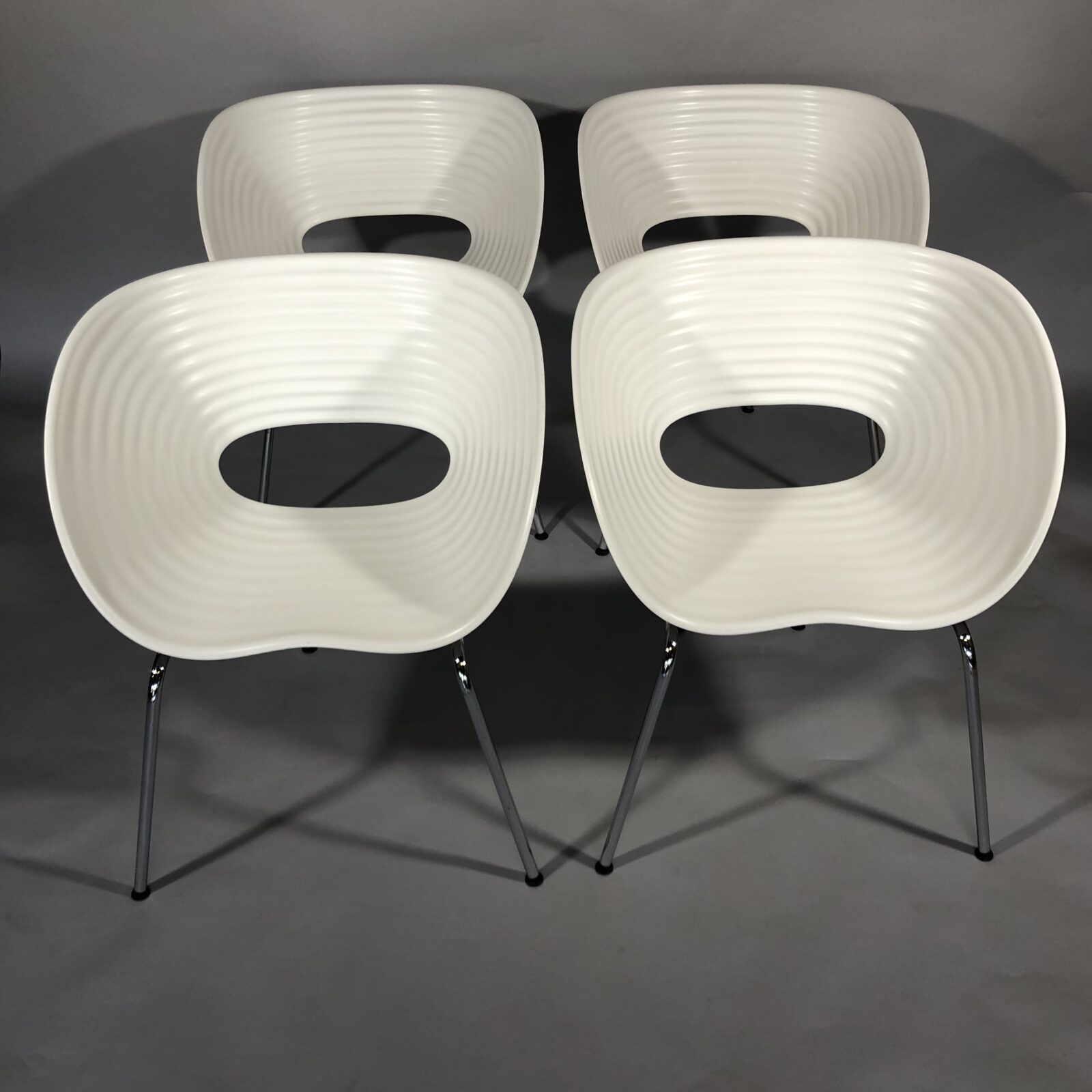 Vitra, Germany. Chrome-plated steel legs with polypropylene seat. Stackable. 65 x 65 x 75 cm. (wear on inside chrome of one chair - sold as set of 4)
-
 Space Design, London. Cantilevered wrought iron frame with cane and rattan pith. 56 x 110 x 134 cm.

Jeremy Stephen Antiques
Jeremy Stephen Antiques
Jeremy Stephen Antiques
Jeremy Stephen Antiques
Jeremy Stephen Antiques
Jeremy Stephen Antiques


Jeremy Stephen Antiques
furniture
furniture
furniture
